The United States remains the world’s largest e-commerce market and one of the busiest parcel-shipping nations on earth. In 2024 alone, U.S. carriers handled an estimated 21.5 billion parcels, and that figure continues to climb as online shopping penetration deepens across every consumer category. Behind every one of those parcels is a shipping label — a small but operationally critical consumable that keeps supply chains moving from warehouse shelves to front doors.
For businesses ranging from Amazon third-party sellers to enterprise-level 3PL providers, finding a reliable shipping label supplier is not a trivial procurement exercise. Label quality directly affects scan rates, carrier acceptance, adhesion during transit, and ultimately customer satisfaction. A smudged barcode or a label that peels off mid-transit can trigger costly re-ships, chargebacks, and negative reviews.
This guide provides an objective, comprehensive look at the U.S. shipping label supply landscape — covering label types, material science, printer compatibility, compliance requirements, sourcing strategies, and supplier comparisons — to help American buyers make smarter purchasing decisions.
Understanding Shipping Label Types and Formats
Before evaluating any shipping label supplier, buyers must understand the fundamental label formats available and how each aligns with different operational workflows.
Roll labels are the most common format for high-volume shipping operations. They are wound around a core (typically 1-inch for desktop printers or 3-inch for industrial printers) and feed continuously through the printer. Roll labels are ideal for automated or semi-automated packing stations where speed matters.
Fanfold labels (also called stack labels) are perforated, Z-folded sheets that sit in a stack behind or beneath the printer. They are popular among e-commerce sellers using desktop thermal printers like Rollo or MUNBYN because they do not require a roll holder and are easy to load. The standard 4×6-inch fanfold shipping label has become the de facto format for platforms like Amazon, eBay, Shopify, and Etsy.
Sheet labels are designed for standard laser or inkjet printers. They come in letter-size sheets (8.5 × 11 inches) with one or two labels per sheet and are a practical option for low-volume shippers who do not want to invest in a dedicated thermal printer.
Each format has trade-offs in terms of cost per label, print speed, equipment requirements, and storage footprint. High-volume fulfillment centers almost universally favor roll or fanfold thermal labels for their speed and per-unit cost advantages.
Direct Thermal vs Thermal Transfer Shipping Labels
The printing technology you use determines which label substrate you need, and vice versa. Understanding this relationship is essential when selecting a shipping label supplier.
Direct thermal labels contain a heat-sensitive chemical coating that darkens when the printhead applies heat. No ink, toner, or ribbon is required. This makes direct thermal the most cost-effective and operationally simple option for shipping labels, which typically have a short functional lifespan (days to weeks in transit).
Thermal transfer labels require a wax or resin ribbon that melts onto the label surface. The resulting print is significantly more durable and resistant to heat, UV light, moisture, and abrasion. However, the added ribbon cost and the need for ribbon management make thermal transfer less common for standard shipping applications.
| Feature | Direct Thermal | Thermal Transfer |
|---|---|---|
| Ribbon Required | No | Yes (wax, resin, or wax-resin) |
| Print Durability | 6–12 months under normal conditions | Several years, even outdoors |
| Cost per Label | Lower | Higher (ribbon adds cost) |
| Best Shipping Use Cases | Domestic parcels, e-commerce, FBA shipments | International freight, hazardous goods, multi-leg transit |
| Printer Examples | Zebra GK420d, Rollo X1040, DYMO 4XL | Zebra ZT411, Honeywell PM45, TSC TTP-286MT |
| Environmental Sensitivity | Fades with heat, sunlight, and friction | Highly resistant to environmental factors |
For the vast majority of U.S. domestic shipping — whether through USPS, UPS, FedEx, or DHL eCommerce — direct thermal 4×6 labels are the standard. They meet carrier barcode scannability requirements, and their lower cost makes them the economically rational choice for high-volume operations.
Key Material and Adhesive Considerations for U.S. Shipping Labels
Not all shipping labels are created equal. The face stock (the printable surface) and the adhesive (the glue layer) must be matched to your specific application environment.
Face stock options for shipping labels include standard thermal top-coated paper (the most common and cost-effective), semi-gloss paper (for higher print contrast), and synthetic materials like polypropylene or polyester (for waterproof or chemical-resistant applications).
Adhesive selection is equally important. A label that falls off a package during sorting or transit causes delays, mis-routes, and customer complaints. The three primary adhesive categories are acrylic (water-based), hot melt, and rubber-based, each with different tack profiles and temperature performance.
| Adhesive Type | Initial Tack | Temperature Range | Best Use Cases |
|---|---|---|---|
| Acrylic (Water-Based) | Moderate | -20°F to 120°F | General shipping, clean corrugated surfaces |
| Hot Melt | High | 15°F to 140°F | Rough or recycled cardboard, high-humidity warehouses |
| Rubber-Based | Very High | 20°F to 130°F | Poly mailers, plastic surfaces, cold-start adhesion |
| Removable | Low to Moderate | 30°F to 100°F | Temporary labels, reusable packaging, returns processing |
For standard e-commerce fulfillment in the U.S., acrylic permanent adhesive on thermal top-coated paper is the industry default. However, businesses shipping in extreme conditions — such as frozen goods, outdoor-stored pallets, or packages transiting through summer heat in the Southwest — should specify adhesives rated for their actual temperature exposure range.
BPA-free formulations are increasingly requested by environmentally conscious brands and are now widely available from reputable suppliers without a significant cost premium.
Printer Compatibility: Matching Labels to Your Hardware
A shipping label is only useful if it runs reliably through your printer. Compatibility issues — labels jamming, misfeeding, or producing faded prints — are among the most common complaints buyers report after switching suppliers.
The U.S. market is dominated by several thermal printer brands, and label specifications must match printer requirements precisely. Key parameters include label width, label length, core inner diameter, roll outer diameter (or stack height for fanfold), and gap/notch type for label detection sensors.
Zebra printers (GK420d, ZD421, ZT411 series) are the workhorse of commercial and industrial shipping operations. They accept both roll and fanfold labels and are compatible with most standard 4×6 direct thermal labels with a 1-inch or 3-inch core.
Rollo (now rebranded with the X1040 model) is the dominant desktop thermal printer for small-to-medium e-commerce sellers. It uses 4×6 fanfold or roll labels and requires no driver installation on most operating systems.
DYMO 4XL and LabelWriter 5XL are popular in office and light-duty shipping environments. DYMO printers use a proprietary label detection system, and while third-party compatible labels are available, compatibility should be verified before bulk purchasing.
Brother QL and TD series printers serve both office labeling and shipping functions. They support a range of label widths and are popular in retail environments.
When evaluating a shipping label supplier, always request sample rolls or stacks to test on your actual printer hardware before committing to a bulk order. A reputable supplier will offer free or low-cost samples specifically for this purpose.
How to Evaluate a Shipping Label Supplier: Quality, Price, and Reliability
With dozens of shipping label suppliers competing for U.S. buyers’ business, distinguishing between a genuinely reliable partner and a low-quality commodity reseller requires a structured evaluation approach.
Quality consistency is the single most important criterion. A label that performs well in one batch but poorly in the next creates unpredictable operational disruptions. Look for suppliers that maintain ISO 9001 quality management systems, conduct 100% inspection protocols, and can provide SGS or equivalent third-party test reports on adhesion strength, print density, and face-stock caliper.
Supply chain reliability matters enormously in a market where fulfillment speed is a competitive differentiator. Suppliers with U.S.-based warehouse inventory can ship within 1–2 business days, compared to 3–5 weeks for direct-from-factory ocean freight. The ideal supplier offers both options — domestic stock for immediate needs and factory-direct orders for cost-optimized bulk procurement.
Pricing transparency is another hallmark of a trustworthy supplier. The true cost of a shipping label includes the unit price, shipping cost, minimum order requirements, and any hidden fees for custom die-cutting or non-standard specifications. Request landed-cost quotes that account for all variables.
Customization capability separates manufacturers from resellers. If you need pre-printed logos, carrier-specific formatting, non-standard sizes, or specialty adhesives, you need a supplier with in-house printing and die-cutting equipment — not a middleman who sources from multiple factories with inconsistent quality.
After-sales support includes handling quality claims, facilitating returns or replacements, and providing technical guidance on label-printer compatibility issues. A supplier that disappears after receiving payment is a liability, not a partner.
Top U.S.-Based Shipping Label Suppliers
The domestic U.S. market includes several well-established shipping label suppliers that offer strong logistics performance and local support. Here is an objective overview of notable players.
Uline is one of the largest industrial and shipping supply distributors in North America. With 13 warehouse locations across the U.S., Canada, and Mexico, Uline offers same-day shipping on most in-stock label products. Their catalog includes direct thermal labels, thermal transfer labels, laser/inkjet sheet labels, and specialty labels for hazardous materials. Uline’s strength lies in its massive inventory breadth and fast fulfillment, though pricing tends to be at the premium end of the market.
SheetLabels.com (now OnlineLabels.com) specializes in both blank and custom-printed labels for laser, inkjet, and thermal printers. They offer a wide selection of sizes, materials, and adhesive types, with a strong emphasis on the small-business and home-office segment. Their website provides detailed compatibility guides for various printer models.
Smith Corona Labels focuses on thermal labels and ribbons, offering competitive pricing on 4×6 direct thermal shipping labels in both roll and fanfold formats. They stock Zebra-compatible and Rollo-compatible labels and maintain U.S. warehouse inventory for fast delivery.
Betckey has grown rapidly as an Amazon-native shipping label brand, targeting e-commerce sellers with competitively priced 4×6 fanfold and roll labels compatible with popular desktop thermal printers. Their direct-to-consumer model keeps costs low, though bulk enterprise pricing may be less competitive than factory-direct alternatives.
These domestic suppliers provide the advantage of fast shipping, easy returns, and U.S.-based customer support. However, for buyers seeking the lowest per-unit cost at high volumes, or requiring extensive customization such as pre-printed branding, custom sizes, or specialty adhesives, partnering directly with a certified overseas manufacturer can unlock significant cost savings.
Sourcing Shipping Labels from China: A Cost-Competitive Strategy
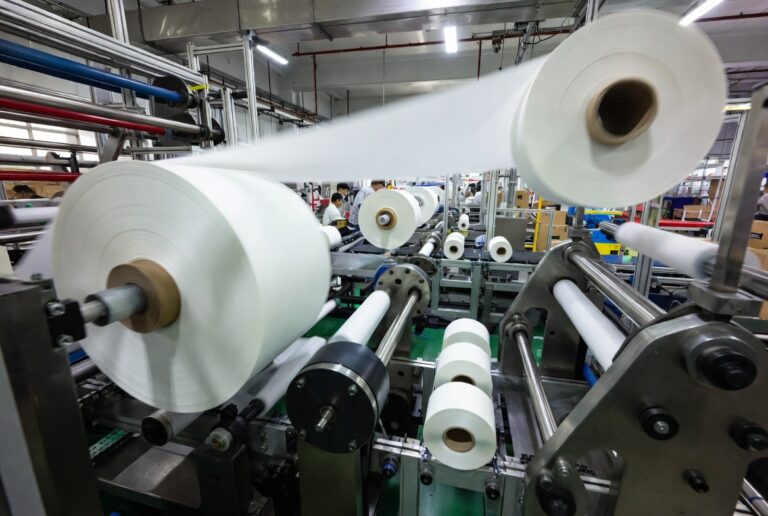
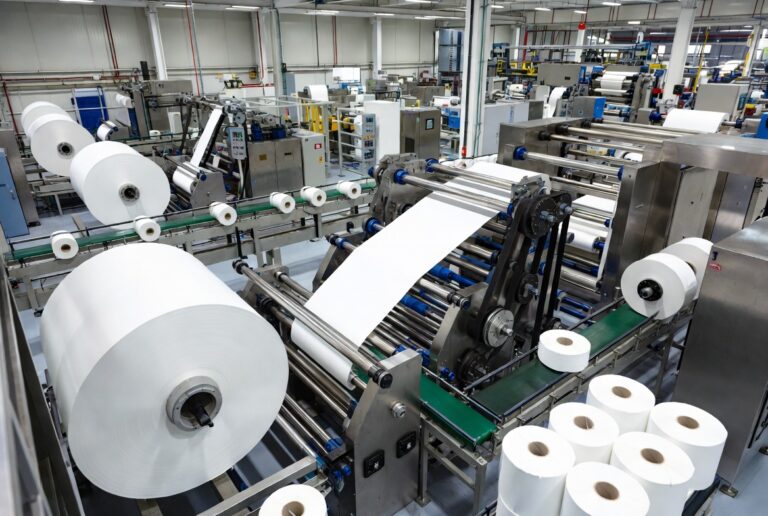
China is the world’s largest producer of self-adhesive label materials and thermal labels. The country’s manufacturing ecosystem offers mature raw material supply chains, large-scale production capacity, advanced printing and converting equipment, and highly competitive pricing driven by economies of scale.
For U.S. businesses purchasing shipping labels in volumes of 50,000 units or more per order, factory-direct sourcing from China can reduce per-label costs by 20–40% compared to domestic supplier pricing, depending on specifications and order volume.
The key concerns that U.S. buyers typically raise about overseas sourcing — lead time, quality control, communication barriers, and minimum order quantities — are largely addressed by working with established, certified manufacturers rather than trading companies or unvetted Alibaba listings.
| Criteria | U.S. Domestic Suppliers | Chinese Manufacturers (Factory-Direct) |
|---|---|---|
| Unit Cost (High Volume) | Higher | Significantly lower |
| Lead Time (Stocked Items) | 1–3 business days | 2–5 weeks by sea; 5–7 days by air |
| Lead Time (U.S. Warehouse Stock) | Same-day to 2 days | 1–3 days (if supplier maintains U.S. warehouse) |
| Customization Depth | Limited to moderate | Extensive (sizes, materials, adhesives, pre-print, die-cut) |
| MOQ Flexibility | Low (often no MOQ) | Varies; some start at 100 pieces per SKU |
| Quality Certifications | Variable | ISO, SGS, RoHS available from top factories |
| After-Sales Support | On-the-ground, phone/email | Remote; improving with U.S.-based operations |
| Best For | Urgent orders, small volumes, standard SKUs | Bulk procurement, OEM/ODM, custom specifications |
The most effective sourcing strategy for many mid-size and large U.S. shippers is a dual-source approach: maintain a domestic supplier relationship for urgent restocking and standard SKUs, while partnering with a Chinese manufacturer for high-volume custom orders and long-term cost optimization.
Recommended Manufacturer: SailingLabel — Factory-Direct Shipping Labels with U.S. Warehouse Support
Among Chinese shipping label manufacturers serving the U.S. market, SailingLabel stands out as a particularly strong option for buyers seeking a combination of factory-direct pricing, extensive customization, and U.S.-based inventory support.
Founded in 2005 and headquartered in Shenzhen, SailingLabel has grown over 19 years into a comprehensive label manufacturing group with production facilities in China and Malaysia, plus a dedicated R&D center equipped with three standardised laboratories and 19 specialised testing instruments. The company holds ISO 9001:2015, GMI, SGS, CE, and RoHS certifications — a credential portfolio that exceeds many competitors in the space.
SailingLabel’s shipping label product line covers a comprehensive range of formats and specifications: 4×6 direct thermal labels in roll and fanfold configurations, custom-printed shipping labels with logo and branding, DHL-compatible and carrier-specific formats, coloured shipping labels for sortation systems, BPA-free options, and economy lines designed for budget-conscious high-volume sellers. The company also supplies thermal labels, A4 labels, linerless labels, industrial labels, Dymo-compatible labels, and thermal paper rolls, making it a genuine one-stop source for businesses with diverse labelling needs.
What makes SailingLabel particularly relevant for U.S. buyers is their Houston, Texas warehouse (located at 4232 Clay Commerce Dr, Katy, TX 77449), which stocks fast-moving sizes and materials for rapid domestic fulfilment. This means American businesses can access factory-direct pricing without enduring the 3–5 week ocean freight lead time for standard reorders.
Additional operational advantages include low MOQs starting from 100 pieces, free sample programmes with 3–5 working day turnaround, OEM/ODM support with in-house design capabilities using Adobe Illustrator, CorelDRAW, and CAD, and global shipping via air freight, sea freight, and DDP express delivery. The About Us page details how SailingLabel has helped clients scale from initial small orders to full container load partnerships — including a documented case study of a Chilean distributor growing from a $3,000 first order to sustained FCL volumes.
For U.S. businesses interested in exploring a direct manufacturing partnership, SailingLabel’s sales team is available 24 hours via WhatsApp (+86 136 2113 7780) or email, and prospective buyers can request quotes and samples directly.
Shipping Label Compliance and Carrier Requirements in the United States
U.S. shipping labels must meet specific carrier and regulatory requirements to ensure packages are processed correctly through automated sorting systems.
USPS, UPS, FedEx, and DHL all require barcodes printed at minimum resolution and contrast levels to ensure reliable scanning. The GS1-128 barcode format is standard for most carrier labels, and the barcode quiet zone (the blank margin surrounding the barcode) must be maintained at a minimum of 1/4 inch on all sides.
Label size standards vary by carrier, but 4×6 inches (100 × 150 mm) is universally accepted and is the default format generated by shipping platforms like ShipStation, Pirate Ship, EasyPost, and Shippo. Some carriers also accept 4×6.75 inch labels for integrated peel-and-stick formats.
Adhesive performance is implicitly regulated by carrier acceptance policies. A label that detaches during transit may result in the package being sent to a carrier’s overgoods/lost-and-found facility, creating delays and potential loss. Carriers recommend permanent adhesive labels that maintain bond strength across a temperature range of at least 0°F to 120°F.
Hazardous materials (HAZMAT) labelling is governed by the U.S. Department of Transportation (DOT) under 49 CFR, and labels for hazardous goods must meet specific colour, size, and durability requirements that typically necessitate thermal transfer or digitally printed synthetic labels rather than standard direct thermal stock.
Cost Optimisation Strategies for Bulk Shipping Label Procurement
For businesses consuming tens of thousands or hundreds of thousands of shipping labels per month, even small per-unit cost reductions translate into meaningful annual savings. Here are proven strategies U.S. buyers use to optimise their shipping label spend.
Consolidate SKUs where possible. Every unique label size, material, or adhesive specification creates a separate production run and potentially a separate MOQ. If your operation can standardise on 4×6 direct thermal labels with permanent acrylic adhesive for 90% of shipments, your per-unit cost will be lower than if you maintain six different label specifications.
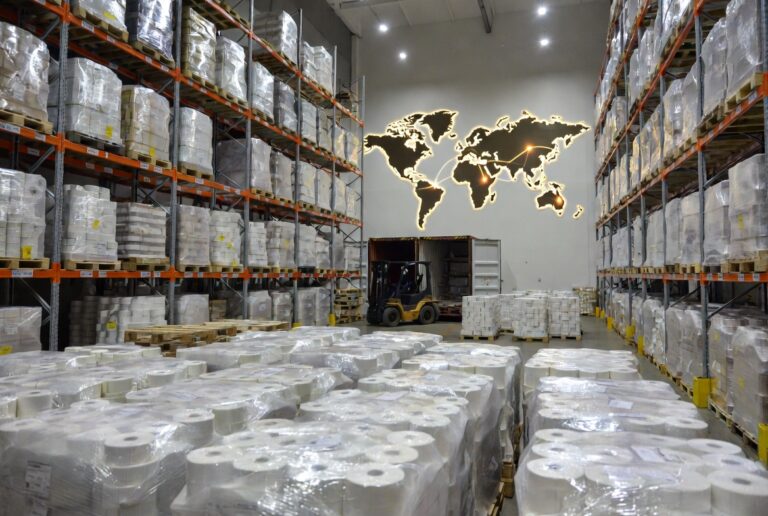
Order in container-load quantities. For businesses with sufficient storage space and predictable consumption, ordering a full 20-foot container of labels from a factory-direct manufacturer can reduce per-unit costs by 25–40% compared to pallet-quantity domestic orders. A standard 20-foot container holds approximately 800–1,200 cartons of shipping labels, depending on roll count and label dimensions.
Leverage overseas warehouse stock. Manufacturers like SailingLabel that maintain U.S. warehouse inventory allow buyers to purchase at near-factory pricing with domestic delivery speed, combining the cost advantages of direct sourcing with the logistical convenience of local supply.
Negotiate annual contracts. Committing to an annual volume with a preferred supplier often unlocks tiered pricing, priority production scheduling, and dedicated account management.
Monitor raw material pricing cycles. Thermal paper pricing is influenced by pulp costs, chemical coating inputs, and energy prices. Working with a manufacturer who maintains raw material inventory — rather than purchasing spot — can insulate you from short-term price spikes.
Frequently Asked Questions About Shipping Label Suppliers
Q1: What is the standard size for shipping labels in the U.S.?
The standard is 4 × 6 inches (100 × 150 mm). This size is compatible with all major carriers (USPS, UPS, FedEx, DHL) and most shipping software platforms. Some applications also use 4 × 6.75 inches for integrated peel-and-stick formats.
Q2: Do I need a thermal printer to use shipping labels?
Not necessarily. You can print shipping labels on standard laser or inkjet printers using 8.5 × 11 inch sheet labels. However, thermal printers are far more cost-effective for volumes exceeding roughly 20–30 shipments per day, as they eliminate ink and toner costs entirely.
Q3: What is the difference between roll and fanfold shipping labels?
Roll labels are wound around a core and require a roll holder inside or behind the printer. Fanfold labels are Z-folded and stack flat, feeding from behind or beneath the printer. Both work with most thermal printers; the choice depends on your workspace layout and printer model.
Q4: How long do direct thermal shipping labels remain scannable?
Under normal indoor storage and transit conditions, direct thermal shipping labels remain scannable for 6–12 months. Exposure to direct sunlight, temperatures above 140°F, or prolonged friction can accelerate fading. For long-duration or outdoor applications, thermal transfer labels are recommended.
Q5: Can I order custom-printed shipping labels with my company logo?
Yes. Many suppliers offer custom pre-printing via flexographic or digital processes. This is especially useful for branded unboxing experiences or for adding return-address information, handling instructions, or promotional messaging directly onto the label.
Q6: What is the typical MOQ when ordering from a Chinese manufacturer?
MOQs vary by manufacturer. Some accept orders as low as 100 pieces per SKU for sampling or initial testing, while bulk production orders typically start at 1,000–5,000 pieces per size or style. Container-load orders offer the best per-unit economics.
Q7: How do I test a new shipping label supplier before committing to a bulk order?
Request free samples and run them through your actual printers under real operational conditions. Test for print clarity, barcode scannability, adhesion to your typical packaging materials (corrugated cardboard, poly mailers, kraft paper), and resistance to handling and moisture. Reputable suppliers like SailingLabel offer structured free sample programmes specifically for this purpose.
Q8: Are BPA-free shipping labels available?
Yes. BPA-free direct thermal labels are now widely available and are becoming the industry standard as regulatory and consumer pressure increases. Most reputable manufacturers have transitioned their product lines to BPA-free formulations.
Q9: What documentation should I request from an overseas shipping label supplier?
At minimum, request ISO 9001 certification, SGS or equivalent third-party test reports, Material Safety Data Sheets (MSDS), and a Certificate of Origin (CO). For food-adjacent or pharmaceutical applications, additional compliance documentation may be required.
Q10: How can I reduce per-unit shipping label costs without sacrificing quality?
The most effective strategies include standardising label specifications across your operation, ordering in larger quantities to access tiered pricing, sourcing factory-direct from certified manufacturers, and leveraging suppliers with U.S. warehouse stock to reduce logistics costs.
Conclusion
The U.S. shipping label market offers buyers a wide spectrum of sourcing options, from fast-shipping domestic distributors like Uline and Smith Corona to cost-optimised factory-direct manufacturers like SailingLabel. The right choice depends on your volume requirements, customisation needs, budget constraints, and tolerance for lead time.
For small-volume shippers and businesses needing same-day availability, domestic suppliers provide unmatched convenience. For mid-to-large-volume operations seeking the best balance of quality, cost, and flexibility, a dual-source strategy that combines domestic restocking with factory-direct bulk procurement from a certified manufacturer delivers the strongest overall value proposition.
Whichever path you choose, prioritise quality consistency, adhesive performance, printer compatibility, and supplier accountability. A shipping label may be a fraction of your total logistics cost, but its failure at any point in the supply chain creates disproportionate operational and reputational damage. Invest the time to evaluate suppliers thoroughly — starting with free samples and small test orders — before scaling your commitment.